
![Watching a small group scrimmage, Ben Lundt, St. Louis City SC goalkeeper and founder of Lundt Pro Soccer Training, shouts words of encouragement to players on Sunday, April 26 n the Lafayette grass soccer field. “The idea behind [the event] was to bring the professional soccer players closer to the community because usually people only get to see us on TV or in the stadium. [Families] actually having the opportunity to have their kids on the field with us is the most important aspect,” Ben Lundt said.](https://lancerfeed.press/wp-content/uploads/2026/05/IMG_6823-1200x800.jpg)











![In celebration of winning his second straight state title in the 215 weight class, junior Carter Brown backflips before leaving the mat. Brown won his bout against junior Kobe Rhymes of North Kansas City High School by fall in just 41 seconds. "Carter does what Carter does. We expect [success] out of him and his goals are bigger than the state championship," coach Sam Ritchie said.](https://lancerfeed.press/wp-content/uploads/2026/03/IMG_2784-1200x800.jpg)









Insults.
Gossip.
Obscenities.
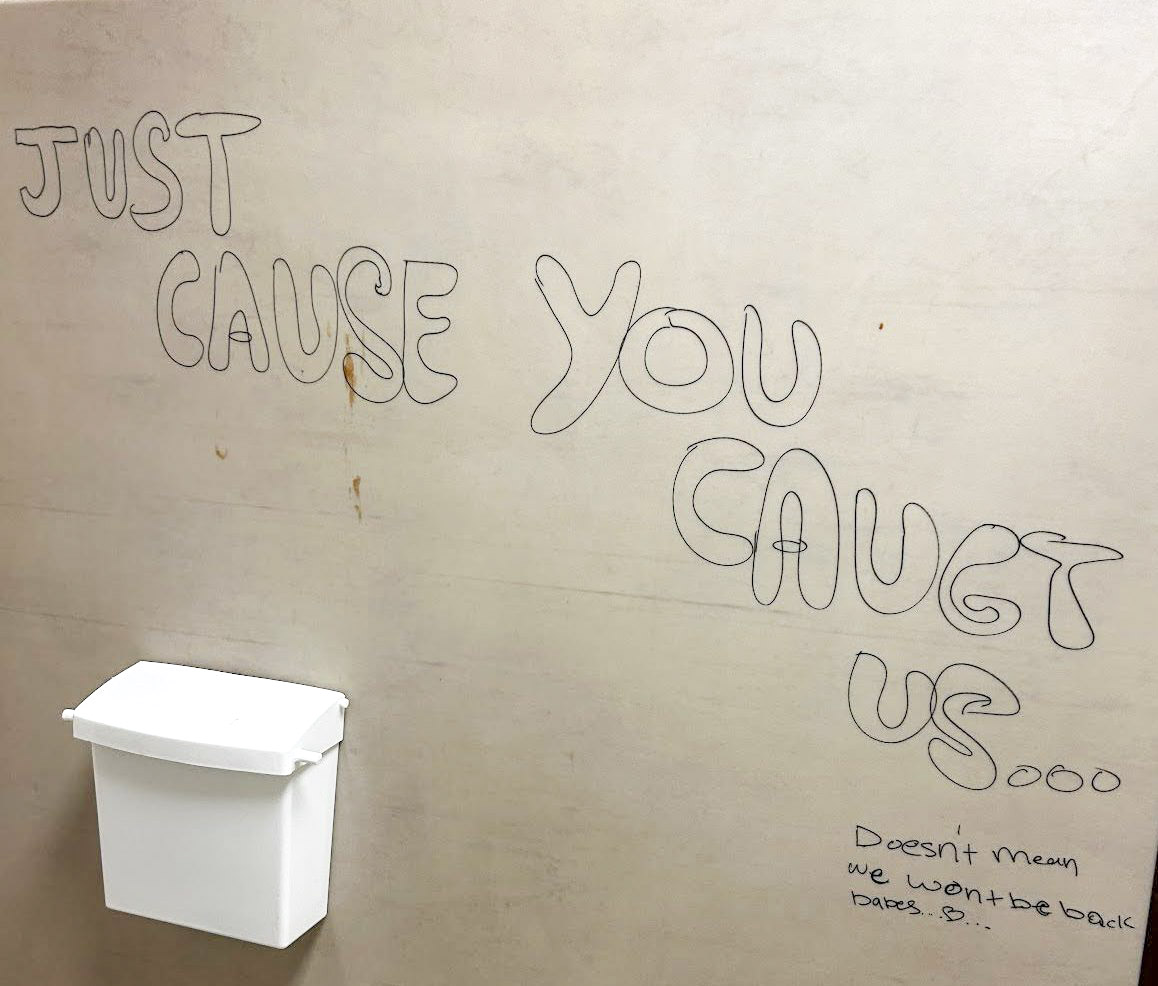
These messages are rampant among Lafayette’s bathroom stalls.
“Latrinalia,” the vandalism of bathroom walls, is not a new concept. Toilet graffiti began in ancient times, with Romans, Greeks and Egyptians as the main perpetrators. Archaeologists discovered silly and philosophical etchings in primeval latrines, dating as far back as 1st century AD. Most of their recordings include bawdy references to bodily functions. While the lewd messages appear trivial, one Ancient North Arabian recognized the lasting impression of such writings, by noting, “My hand will wear out but the inscription will remain.”
In modern times, latrinalia has taken on a darker role. Mostly gone are the notes of humor, defiance or social messages. The graffiti of today has a more personal tone. High school students in particular utilize bathroom stalls as a platform for spreading hate and rumors. Students etch insulting messages directed to their peers into the steel panels, promoting everything from torment to slander.

At Lafayette, students vandalize nearly every bathroom stall. Some of these messages aim to harm others, even including the victim’s name. When direct confrontation is removed from conflict, and hurtful words can be uttered without repercussion, students feel empowered to slander.
This concept is reflected in the rise of social media, providing cyberbullies with a shield of anonymity. Further, both bathroom walls and online communities offer a captive audience for perpetrators to decry their victims. In this way, toilet graffiti and online posts are a public humiliation ritual. Bullies not only want their targets to see their message, but for targets to know there was a huge audience of peers viewing the insults.
The impact of this cowardly cruelty is overlooked due to a lack of critical discussion. Victims of defaming latrinalia or innocent bystanders may feel afraid to come forward with information for fear of in-kind retaliation or being labeled a “snitch.”
This feeling of helplessness often manifests into anxiety, depression and even suicidal ideation. In one example from 2013, students wrote a San Antonio middle schooler’s phone number on a bathroom wall with an insulting message. The incident escalated into cyberbullying and harassment, compromising the victim’s safety and self-esteem.
Another latrinalia instance sparked local outcry, as Parkway Central students discovered racist hate speech on bathroom stalls, floors and mirrors. Many high schoolers walked out of school in protest, with Parkway’s student organization describing frustration over how racism “[continues] to happen with little to no repercussions for the perpetrators.” This racist behavior persists due in large part to the unchecked pervasiveness of graffitists, leaving lasting consequences for the school community.
At school, students are entitled to safety and respect, and that right doesn’t stop in the bathrooms. Administrators are faced with the difficult task of holding unknown students accountable for these senseless acts of property damage. Per Rockwood’s vandalism policy, students involved in latrinalia face suspension or expulsion, including possible notification to law enforcement officials and remuneration for damages. Even an act as simple as a student doodling on a desk constitutes vandalism and is subject to the same punishments for defacement.
Despite the penalties, Lafayette’s toilet graffiti persists. To stop this behavior, the student body should take a closer look at the effects of latrinalia.

Aside from being an eyesore, bathroom graffiti imputes a neglected or even unsafe image onto schools, dissuading potential enrollees. Psychologists have studied the connection between clean learning environments and academic performance, finding that students in graffitied schools achieved lower test scores.
Further, the estimated yearly cost of school vandalism is $1 billion nationwide, with significant funds attributed to bathroom graffiti. On average, a new bathroom stall installation costs $825.50 to $1,150. These are resources from the school’s budget which depletes, along with the capacity for other vital improvements and educational programs, with each repair.
Student graffitists pay the cost of their destruction straight out of their own pockets. Schools depend on local taxpayers to fund projects–the offending student’s own parents and neighbors–including bathroom repairs. According to Rockwood’s Prop S FAQ, 17 cents of every tax dollar is spent on facility maintenance. Allocating resources locally becomes increasingly difficult as the Missouri governor recommended the State Adequacy Target (cost of education per student) decrease from $7,145 to $6,760, which would cause an estimated $7 million loss in public funding for our district.
Lack of manpower further curbs graffiti removal initiatives. Over the past year, Rockwood has faced a custodian shortage comprising 30-40% of total staff across the district. With 65-75 custodial positions consistently unfilled, janitors are forced to work long after-school hours just to keep up with the basics. Graffitists add to their heavy workload.
Curbing latrinalia starts with awareness. Vandals may think their graffiti is harmless, but their participation in the crime ultimately speaks to their sense of entitlement and selfishness. Not only does latrinalia harm the target, but it harms the entire school community, not least of which the perpetrator. Graffitists senselessly damage school property and leave overworked custodians to clean up their mess. To combat latrinalia, Lafayette could consider partnering with local businesses in the “Adopt-A-School” program to remove the defacement and protect budgets.
To the student vandals: leave your mark through positive change and academic growth, not bathroom walls.