![Watching a small group scrimmage, Ben Lundt, St. Louis City SC goalkeeper and founder of Lundt Pro Soccer Training, shouts words of encouragement to players on Sunday, April 26 n the Lafayette grass soccer field. “The idea behind [the event] was to bring the professional soccer players closer to the community because usually people only get to see us on TV or in the stadium. [Families] actually having the opportunity to have their kids on the field with us is the most important aspect,” Ben Lundt said.](https://lancerfeed.press/wp-content/uploads/2026/05/IMG_6823-1200x800.jpg)












![In celebration of winning his second straight state title in the 215 weight class, junior Carter Brown backflips before leaving the mat. Brown won his bout against junior Kobe Rhymes of North Kansas City High School by fall in just 41 seconds. "Carter does what Carter does. We expect [success] out of him and his goals are bigger than the state championship," coach Sam Ritchie said.](https://lancerfeed.press/wp-content/uploads/2026/03/IMG_2784-1200x800.jpg)










The school bell has consequences beyond marking students tardy.
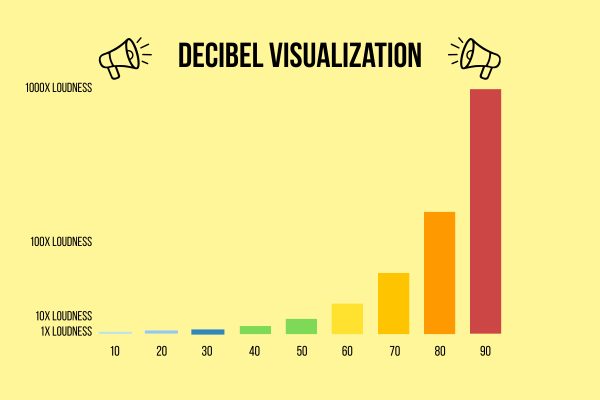
Noise is measured by the frequency and intensity with which sound waves travel to the ear using decibels (dB) on a logarithmic scale. This means a 10 dB increase represents a 10-fold increase in sound intensity, while roughly three dB doubles sound intensity.
The National Institutes of Health explain that consistent exposure to sounds at or above 85 dB can result in noise-induced hearing loss (NIHL). Louder sounds speed up this process, requiring less time to create NIHL.
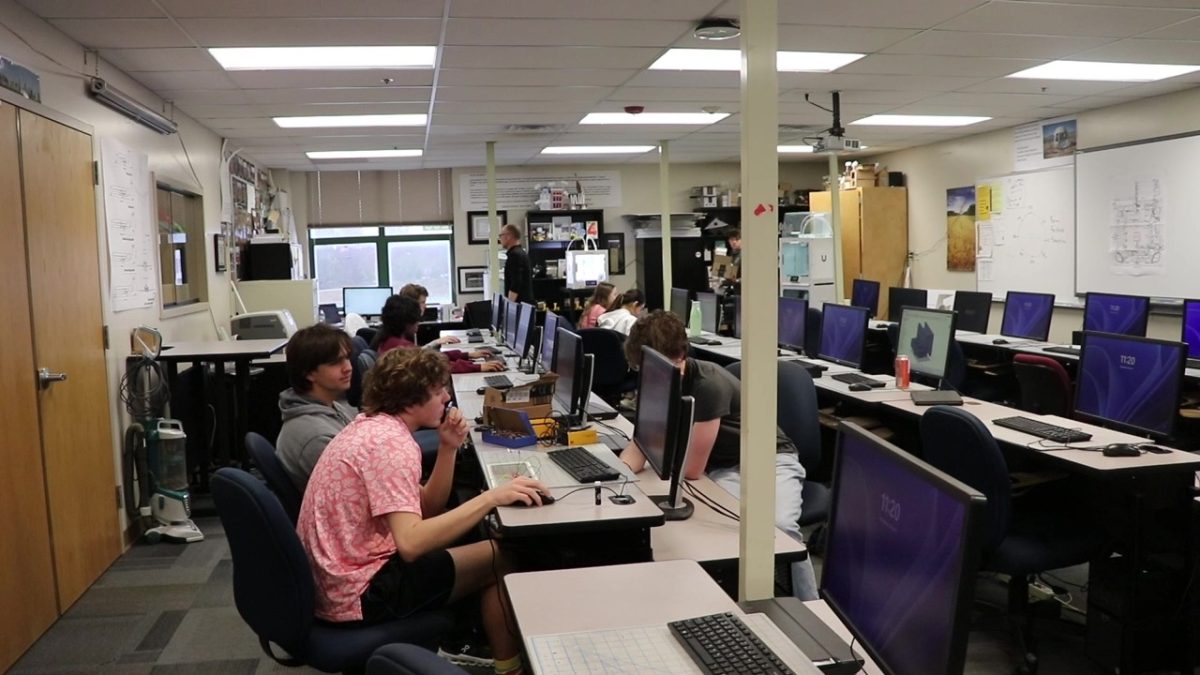
I talked to environmental science teacher Dr. Hall, who described Lafayette’s bell as a frequent complaint among science teachers. Hall decided to measure the bell’s volume in the middle of her classroom using mobile app Decibel X. According to Hall’s measurements, Lafayette’s bell rings at approximately 90 dB—five dB over the maximum safe volume for ears (85 dB). While this may not seem significant, five dB triples the sound intensity.
As Hall teaches in her environmental science class, noise pollution is unwanted or disturbing sound that interferes with daily activities or quality of life. Due to its dangerous volume for hearing, Lafayette’s bell is considered a noise pollutant.
The Environmental Protection Agency (EPA) describes the consequences of noise exposure in adolescents as impaired hearing, learning, speech, sleep and cardiovascular health.
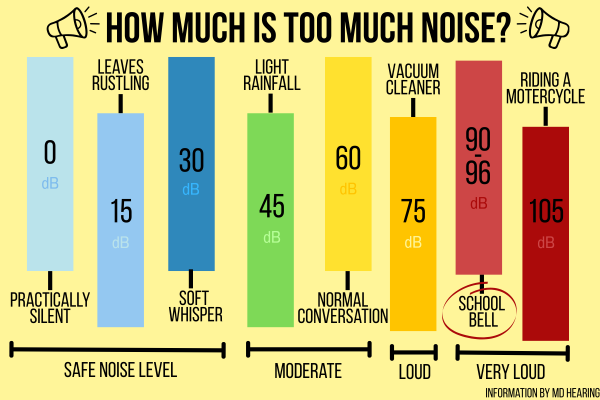
However, the school bell isn’t Lafayette’s only source of noise pollution. Using Decibel X, I measured various areas around the school and found troubling dB levels. In the cafeteria during lunchtime, volume levels were an average of 80 dB and reached a maximum of 96 dB.
I also measured the bell in an otherwise silent room 137A, yielding a volume of 96 dB.
School bells also have adverse effects on mental health. According to Banner Health, frequent exposure to loud noise like that of a bell can trigger the brain’s flight-or-fight response, producing cortisol, a stress hormone. Over time, consistent exposure may cause chronic stress. The abrupt nature of a school bell can also disrupt focus and workflow by impacting concentration and mental energy.
To address this safety hazard, Hall suggests adminstration should lower the bell’s volume.
Another solution is to get rid of school bells completely. East Middle School in Joplin, Mo. stopped using bells in 2012. I spoke to former Assistant Principal Jason Weaver about the school’s experience without a bell schedule.
After East Middle School was destroyed by a tornado in 2011, the school taught in a warehouse, leaving the facility pressed for space. Describing the school’s passing periods at the time as a “crowded affair,” Weaver explained how administration devised a plan to cut down on hallway traffic.
“We decided to stagger class periods, so that not all classes began or ended at the same time, depending on grade level,” Weaver said. “Sixth, seventh and eighth graders each had their own schedule, just a few minutes off from each other.”
Weaver described the no-bell system’s success in not only reducing crowded passing periods, but in allowing teachers more flexibility in their schedules.
“We discovered that maybe it wasn’t necessary to use bells,” Weaver said. “Teachers would move students from subject-to-subject based on what was best for their class at the time.”
Since moving to a new building with the space to support heavy hallway traffic, East Middle School has returned to a block schedule and reinstituted the bell system.
Lafayette could also swap the traditional school bell for alternatives like SonarCloud, which use softer, less-jarring tones for Public Address (PA) system announcements. In one article, SonarCloud describes how transitioning to gentle bell tones allows schools to create a “more empathetic, responsive and joyful learning environment.”
Most importantly, implementing an announcement system that doesn’t exceed 85 dB will protect students and staff from potential hearing damage.