![Watching a small group scrimmage, Ben Lundt, St. Louis City SC goalkeeper and founder of Lundt Pro Soccer Training, shouts words of encouragement to players on Sunday, April 26 n the Lafayette grass soccer field. “The idea behind [the event] was to bring the professional soccer players closer to the community because usually people only get to see us on TV or in the stadium. [Families] actually having the opportunity to have their kids on the field with us is the most important aspect,” Ben Lundt said.](https://lancerfeed.press/wp-content/uploads/2026/05/IMG_6823-1200x800.jpg)






![In celebration of winning his second straight state title in the 215 weight class, junior Carter Brown backflips before leaving the mat. Brown won his bout against junior Kobe Rhymes of North Kansas City High School by fall in just 41 seconds. "Carter does what Carter does. We expect [success] out of him and his goals are bigger than the state championship," coach Sam Ritchie said.](https://lancerfeed.press/wp-content/uploads/2026/03/IMG_2784-1200x800.jpg)





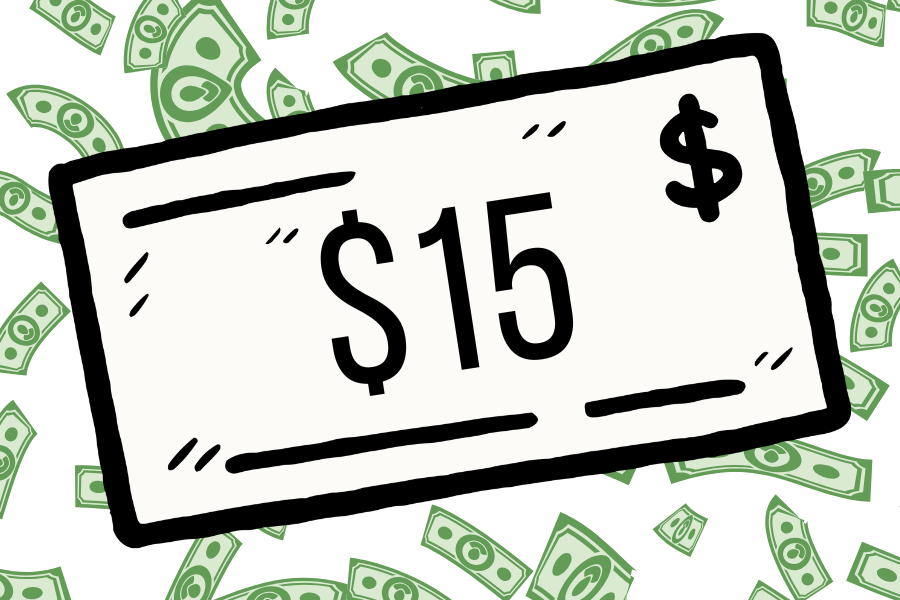
On Jan 10, 2025, Missouri Governor Mike Kehoe signed into law a new minimum wage increase that raises pay to $15 an hour starting Jan. 1, 2026. The bill was approved by voters through Proposition A in 2024, with 57% of voters supporting the change.
Although wages have been slowly increasing due to inflation, this measure marks one of the largest voter-approved minimum wage increases in Missouri’s history, raising the rate from $13.75 to $15 an hour.
Under the new law, employers engaged in retail or service businesses whose annual gross income is less than $500,000 are not required to pay the state minimum wage rate. This means that employers not subject to the minimum wage law may pay employees wages of their choosing. Employers are also required to pay tipped employees at least 50% of the minimum wage, or $7.50 per hour, plus any additional amount necessary to ensure the employee earns a total of $15 per hour.
Many local officials have expressed support for the increase, citing its benefits for workers facing rising living costs.
“I think that having an increased minimum wage is something that everyone can agree with because it allows the worker to have more money in their pocket which certainly makes things easier, especially when the cost of living is going up,” Wildwood Mayor Joe Garritano said.
However, the new law does come with trade-offs. Automatic inflation-based wage increases were removed, meaning wages will no longer rise gradually alongside inflation. In addition, paid sick leave protections that voters had previously approved were repealed, leaving workers without guaranteed paid sick leave. All of this was in the Missouri House Bill 567 (HB 567).

“I would say those are most definitely negatives. This is another example where there might be something in a bill that comes across as looking good, but then, other times, there are amendments or items inside the bill that can negatively impact people. That’s why I encourage everyone, especially students to read up and understand exactly what kind of legislation is being passed because it could affect us,” Garritano said.
Despite these drawbacks, Garritano believes the law ultimately benefits Wildwood, specifically with small businesses.
“I think that [this] will help smaller businesses to try to stay competitive for a skilled labor force,” Garritano said.
Garritano also emphasized the importance of local decis
ion-making when it comes to how laws affect individual communities.
“It’s so important that we continue to preserve and maintain local control because if all the decisions are made elsewhere in Jefferson City, they may not necessarily make those decisions with the Wildwood resident in mind. And so, that’s why local control is so important because it gives people a voice and the power here locally to really control their destiny,” Garritano said.
At the local level, some Wildwood businesses have struggled to attract workers, and officials say the wage increase could make jobs more appealing, especially to students and young workers.
“Generally speaking, one of the biggest issues that we have out in Wildwood is with how these businesses pay their employees. Many of our businesses that are local to Wildwood have a hard time finding employees because, for a lot of high school kids, doing something for $13 an hour just doesn’t sound appealing. A lot of our restaurants here in town, they can’t find people to work as servers,” Joe Farmer, Wildwood City Council Board member said.
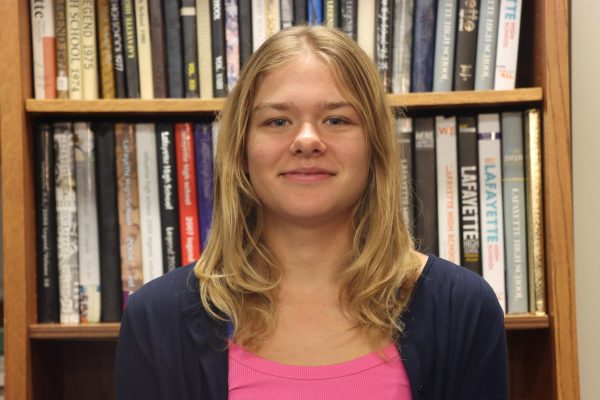
For some students, the impact of the wage increase is already being felt firsthand. Senior Ellie Vandesteeg, who works at Singers Ice Cream in the Wildwood Town Center, recently saw her pay increase as a result of the new law.
“I’ve worked at Singers for 9 months since the beginning of last May. I got paid $13.75 before the minimum wage increased,” she said.
For Vandesteeg, the change has been a positive one.
“I was pretty excited to find out I was going to be making more,” she said.
While Missouri adjusts to the new minimum wage and its challenges, the effects are likely to continue unfolding across communities like Wildwood. Although the law brings both benefits and challenges, it has already begun reshaping conversations about wages.