
![Watching a small group scrimmage, Ben Lundt, St. Louis City SC goalkeeper and founder of Lundt Pro Soccer Training, shouts words of encouragement to players on Sunday, April 26 n the Lafayette grass soccer field. “The idea behind [the event] was to bring the professional soccer players closer to the community because usually people only get to see us on TV or in the stadium. [Families] actually having the opportunity to have their kids on the field with us is the most important aspect,” Ben Lundt said.](https://lancerfeed.press/wp-content/uploads/2026/05/IMG_6823-1200x800.jpg)












![In celebration of winning his second straight state title in the 215 weight class, junior Carter Brown backflips before leaving the mat. Brown won his bout against junior Kobe Rhymes of North Kansas City High School by fall in just 41 seconds. "Carter does what Carter does. We expect [success] out of him and his goals are bigger than the state championship," coach Sam Ritchie said.](https://lancerfeed.press/wp-content/uploads/2026/03/IMG_2784-1200x800.jpg)





February marks Black History Month, but at Lafayette, it represents more than a date on the calendar. It serves as a reminder that the American story is layered, complex and built by many different communities whose contributions are not always fully recognized in day to day lessons.
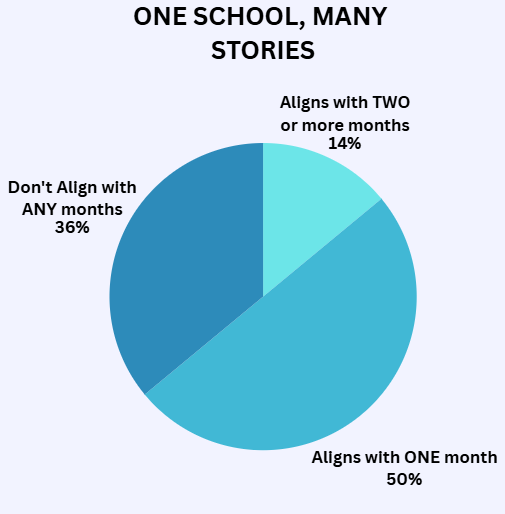
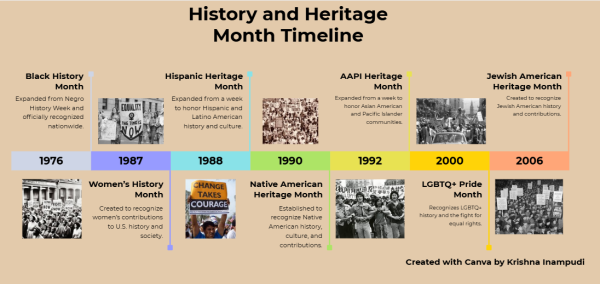
History and heritage months such as Black History Month, Asian American and Pacific Islander Heritage Month and Jewish American Heritage Month exist for a reason. They also help make sure everyone’s story gets told. They ensure that the broader narrative of American history includes the voices, struggles and achievements of groups that have shaped the nation.
Michael Hui, a Spanish teacher, believes dedicating time specifically to these communities matters.
“It helps people gain a better understanding of important historical events and cultural aspects, whether from the past or present, and gives us a chance to recognize and celebrate those contributions,” Hui said.
In a fast paced school year, cultural recognition can easily become secondary to curriculum requirements. A full month creates intentional space for reflection and discussion.
“Having a whole month dedicated to a group is really meaningful,” Hui said. “There are celebrations, music, shows and discussions that help bring attention to these cultures. Having that spotlight for an entire month is pretty powerful.”
That spotlight is not just about celebration. It is about perspective. Schools are often the first place where students encounter histories different from their own family backgrounds. Exposure shapes understanding of the moments and backgrounds of different ethnicities.
“Learning about different cultures really expands your worldview,” Hui said. “It gives you a wider perspective and helps you see through someone else’s lens instead of only your own.”
In February, that lens focuses on Black history. Black Literature teacher Sophia Beasley explained that the observance began as a weeklong recognition before becoming a monthlong tradition. February was chosen because it includes the birthdays of Abraham Lincoln and Frederick Douglass, powerful figures that aided in the broader fight against slavery and the pursuit of civil rights.
Beasley stressed that Black history should not be viewed as separate from American history.
“Black history is American history,” Beasley said. “Understanding how our country was built requires understanding Black history.” She added that it is important to “highlight the achievements and accomplishments of Black people and recognize how they have contributed to the United States.”
Beasley also emphasized that history is not confined to the past. “What’s really important to remember is that Black history is still being made today,” she said. “We’re living through it.” That perspective shifts the focus from memorizing names in textbooks to recognizing ongoing impact in the present.
The same principle carries into May during Jewish American Heritage Month. History teacher Vincent DeBlasi framed its purpose clearly. “It’s about celebrating the Jewish people who helped build our country,” DeBlasi said. “In schools, it helps students see that history is made by a diverse mix of neighbors and friends.”
“I think of American history like a giant puzzle,” DeBlasi said. “Jewish stories are a huge piece of that puzzle, showing how immigration and hard work helped shape the country we live in today.”
This isn’t just unique to just Jewish Americans. We must acknowledge that each and every group of people honored by a history or heritage month have a profound impact on the US.
DeBlasi also highlighted a long tradition of advocacy. “Jewish Americans have a long, proud history of fighting for the rights and dignity of everyone.”
But at Lafayette, these ideas meet in the classroom where the conversation goes beyond what’s in the textbook. Literature, projects, and conversation help students think critically about whose stories are being told and why. Heritage months give structure to the learning, but the point is to understand.
When students realize that other cultural histories are a part of American history and that communities have built America through hard work and perseverance, it all starts to make sense. Suddenly, history is no longer a list of dates but a story about real people – neighbors, classmates, friends – whose stories have helped create the world we live in today.
Ultimately, heritage months remind students that the American story is ongoing. It is shaped not only by past leaders but by present voices. As Beasley said, “We’re living through it.” That reality makes these months more than commemorations. They are opportunities for reflection, recognition and growth. At Lafayette, that understanding continues long after the calendar turns to a new month.